Chicago's skyline conceals a great deal of hard work at road level. Distribution anchors roar before daybreak, vehicle shops light their bays at dawn, and parking structures cycle doors thousands of times prior to twelve noon. In in between, there is an invisible current of regulations that maintains every person secure: the Chicago Building Ordinance, NFPA requirements, UL listings, wind load requirements, and electrical and fire-alarm integrations. Miss one aspect, and the door that looked fine at turn over can fail the first evaluation or, worse, fall short when smoke and warm test it for real.
This is where a seasoned Industrial Garage Door Solution matters. FireKing methods Industrial Garage Door Setup in the Chicago location with one purpose that outlives any strike listing, to make the door a trusted component of the building's life security strategy, not simply a moving wall. That suggests addressing what drawings can not show, developing for lakefront wind and January chilly, and threading neighborhood code analyses right into the equipment and controls from day one.
What code compliance truly indicates here
Chicago modernized its building regulations based on the International Building Code framework, after that layered in neighborhood changes that reflect the city's building supply and environment. In practice, a compliant industrial garage door must please a handful of interconnected needs that show up on almost every project:
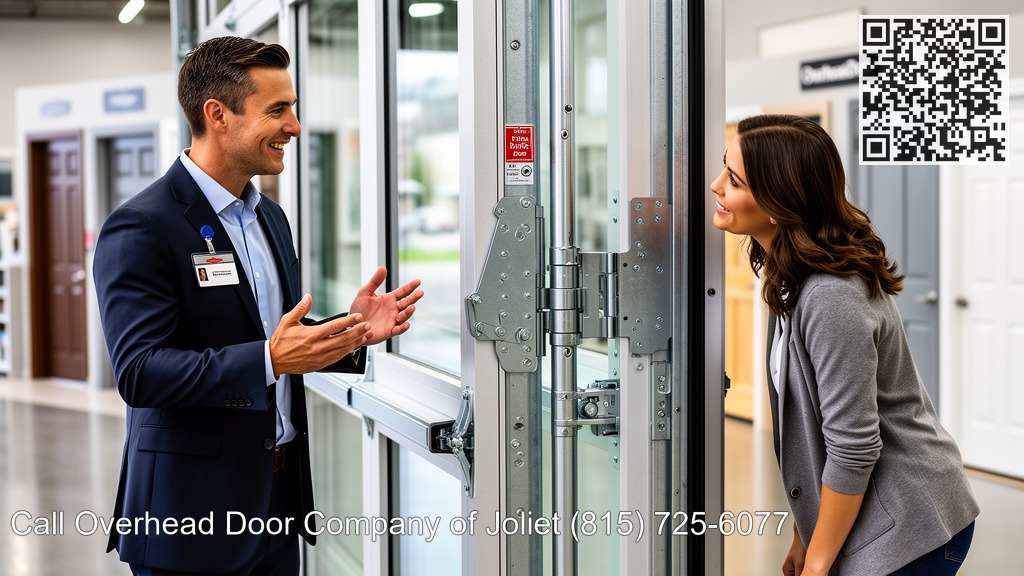
- Fire and smoke protection where the tenancy demands it. Openings in fire-resistance-rated dividings or obstacles require a listed, classified assembly with the appropriate fire-protection rating and proper signage. For garages attached to other tenancies, you will certainly typically see 60, 90, or 180 min scores defined. NFPA 80 controls installation and annual screening for fire doors. Smoke and draft control may be called for by the design team, which adds gasketing and leak limitations determined at particular pressures. Safe procedure and controls. UL 325 is the standard for door operators, including checked entrapment security, photo eyes or edge sensors, and hand-operated ways to launch in an emergency situation. If the door is mechanized and linked to an emergency alarm, the releasing gadget must be listed for that objective and mounted per the supplier's instructions. Structural capacity and wind tons. The city's wind speed layout maps drive the door curtain, guides, and assistance steel option. Around Chicago, several sites layout in the 115 to 120 miles per hour variety depending on exposure. A rolling steel fire door or protected sectional that is not ranked for the wind load comes to be a maintenance trouble and a safety and security take the chance of the very first time lake gusts push hard with an alley. Egress and clearance. Where a door becomes part of a path of traveling or beside one, clear opening measurements, vision panels, and blockage controls matter. On filling docks, life safety additionally stays in the little details: where the pull chain ends, just how the handbook release is identified, and whether an individual can return to the structure if the door goes down on alarm. Energy and climate. The Illinois Power Conservation Code and Chicago's changes have teeth. Shielded sectional garage doors and rolling doors with insulated slats can pay back swiftly in warmed facilities, yet the air seal package and overview weatherstripping do the actual job versus winter seepage. Add driver heaters, cold-weather image eyes, and appropriate hood baffles if the door is near open air.
Compliance is not a single code citation. It is how every one of these pieces add up when an assessor walks the website with a list and aims to see whether the tags match the illustrations and the installation matches the labels.
Where the dangers hide in industrial garages
On illustrations, a garage door is a rectangular shape with a tag. In the area, that rectangular shape can be a thirty-foot opening on a gusty edge that encounters a public walkway or a seven-foot counter shutter between a fixing bay and parts office. The danger account changes with the setting.
A multi-tenant building in River North may have a single upward-acting door that cycles 300 times a day throughout morning and night heights. That workload strikes springs, birthing plates, and operator duty cycle. It likewise magnifies what a misaligned picture eye can do during rush hour. In a repair garage on the Southwest Side, exposures look different. You may have a rated separation between the store and customer lounge, with a fire door required to self-close on alarm system. Oil haze and welding nearby add the need for correct decrease screening and documented resetting treatments, since that door is part of the insurance policy carrier's audit trail.
Warehouse dock doors in Elk Grove Village or Bedford Park bring one more spin. You can have eight to twelve doors in a row, some common shielded sectionals for inbound and outbound, and a couple of rolling steel fire doors that secure the hallway to office. Those fire doors should not be obstructed, should drop reliably, and has to interface with a releasing panel fed by the building smoke alarm. A forklift driver that can not see the lower bar while the door is dropping is a close to miss out on waiting to take place unless the strobe and horn remain in the ideal location and the signs is clear.
I have actually seen straightforward mistakes that add threat: a fusible web link hung as well near to a system heating system, which trips at 165 degrees the very first time the thermostat runs warm, or a chain hoist installed at the wrong height so the fastest staff member shoulders the emergency launch on tiptoes. These are not simply aggravations. In an event, they change mins and inches that matter.
Picking the appropriate door for the job, not simply the spec
Materials and systems lug trade-offs that impact security, upkeep, and uptime. You can hit the spec and still decide that acquire service telephone calls or drags energy out of the building all winter months. Below is just how the common alternatives shake out in Chicago practice.
Rolling steel fire doors fit many opening defense cases in mixed-occupancy structures. They lug identified fire ratings to 3 hours, integrate with releasing tools that tie into the smoke alarm, and, with built-in guvs, they come down at a regulated price on alarm system. When picked with insulated slats and brush seals, they also carry out reasonably well against wind and cold. Their pleasant area consists of passages in between a garage and lessee solution areas, parking garage openings that should end up being fire-resistance-rated barriers throughout an occasion, and filling doors that function as fire separation.
Insulated sectional doors serve hefty cycling demands and power performance. With R-values frequently in the mid to high teenagers for common panels, plus boundary seals, they make good sense in warmed service center and distribution centers. Select torsion springtime cycles according to real use. I press customers who run hundreds of cycles each day to spec 50,000 to 100,000 cycle springtimes and to budget for a midlife re-spring. For ways of egress, sectional doors are hardly ever part of the leave route, yet their safety features under UL 325 still matter, specifically checked photo eyes that can not be bypassed with tape.
High-performance material doors appeal where rate matters, such as energetic parking lot with tight ramps. They open up fast, often as much as 60 inches per 2nd, lower air exchange, and improve web traffic circulation. Their fire and smoke versions exist, but not all carry the very same listings as rolling steel fire doors. A layout group have to collaborate the listing, leakage scores for smoke, and the local Authority Having Jurisdiction's interpretation.
Security grilles and perforated shutters allow air move while hindering accessibility. They belong at open pedestrian entries to organized car parking where ventilation estimations drive the layout. Fire and smoke control is usually dealt with in other places in the setting up, so they are not a catch-all solution in mixed-use structures where a classified setting up is called for at a rated wall.
There is likewise the conversation about driver kind. Jackshaft drivers with chain hoists prevail on rolling doors, yet in tight shafts or when appearances issue, a hidden tube motor can aid. Keep in mind tube motors trade serviceability for clean lines. In cool spaces, I such as drivers with indispensable heating units and NEMA 4 enclosures near washdown or street sprinkle areas. No matter kind, UL 325 conformity with monitored security devices is non-negotiable.
Anatomy of a compliant set up, the method we construct it
Good Commercial Garage Door Installation starts prior to a measuring tape touches the opening. We begin with the set of permit drawings, after that walk the site to see what they missed out on. Clearance and sideroom dictate what is even feasible. Architectural add-ons make a decision whether a door vibrates itself loose in six months. Conduit transmitting and panel locations determine whether a releasing device will drop the door throughout an alarm system or sit waiting on a cord that never ever comes.
The job strategy checks out like a choreography. Support steel or angle irons go in initially, shimmed and torqued to spec. Guides or tracks go up real and plumb, with gauged reveals for brush or bulb seals. Hoods, barrel, and drape assemble on rolling steel doors so the drive side lands where service access will not jeopardize safety. On sectional doors, the track distance, backhang, and spring shaft match the opening and cycle requirements. Electricians path committed circuits and low-voltage lines to the driver and releasing panel without chasing them around a warm flue or refrigerant line. At the end, identifies remain visible, the decrease speed is confirmed, and the operator's logic is set to the structure's rules.
Here is the compact checklist we make use of to keep life safety and security front and center at turn over:
- Fire rating tag photographed and logged, matching the plans. Releasing device tested on alarm, drop speed validated, and reset documented per NFPA 80. UL 325 entrapment defenses calibrated and fault-monitored. Wind lots and architectural supports verified versus submittals, bolt torque recorded. Signage, draw terminals, and manual releases positioned at reachable elevations with clear sightlines.
Those five factors capture most of the misses we see after other teams do a quick set up. They also form the backbone of the turn over package that greases the path for examinations and insurance audits.
Three Chicago stories that explain our approach
A circulation hub near O'Hare exchanged out 2 aging fire-rated rolling doors that separated the dock from the finished-goods corridor. The initial doors were heavy, manual-only devices that no one wished to evaluate. Evaluations became strained afternoons. We replaced them with motorized, classified 3-hour doors with guvs and electric releasing tools tied right into the center's FACP. Door size was 14 feet by 12 feet, with protected slats and overview weatherstripping. We included regional horn strobes at each side and an annunciated push-to-open after decrease, collaborated with the fire protection engineer. During commissioning, the plant supervisor watched a complete drop test from initiation to reset. The reset treatment took under 4 mins. A year later, their NFPA 80 annual examination log shows no failings, and their insurance service provider kept in mind the improvement in the loss-control report.
On a tight alley in Wicker Park, a mixed-use building required a silent, trusted garage door for tenant car park that would certainly not fight the wintertime wind. A shielded sectional with a 25,000 cycle springtime would have functioned, however website traffic matters from the condo board revealed 200 to 300 cycles daily. We updated to a 75,000 cycle spring set, mounted a silent jackshaft driver with a heated control unit, and worked with a draft stop detail at the lintel to close a pesky 1-inch gap lots of people miss. The operator's soft-start ravelled early morning actuations, and the power loss through that opening went down visibly. The building engineer called the first polar vortex after turnover and claimed, simply, the entrance hall is cozy for the very first time in years.
An auto repair shop in the West Loophole had a seven-foot opening from the bays right into a client service workdesk, attracted as a rated wall. The wrong item, a fundamental counter shutter without a label, turned up from a previous vendor. Their permit review flagged it, and the work delayed. We determined, got a labeled fire-rated counter door with a 90-minute tag, and mounted a small launching panel that linked neatly into the existing meddle and waterflow circuits with the emergency alarm contractor. The area was tight, so we made a tidy angle frame to avoid exploration into the demising wall's studs, which the engineer wanted untouched. We then educated team to reset the door after a drill. The fix relocated the project off redline and gained a tidy last on the initial re-inspection.
Maintenance that actually safeguards people
A door is not certified if it can not pass its own examination a year from currently. That is where thoughtful Industrial Garage Door Solution and Commercial garage door repair work maintain safety. The solution strategy need to show use, setting, and code. A chilly alley door that sees salt spray and freeze-thaw requires a different touch than an interior counter shutter.
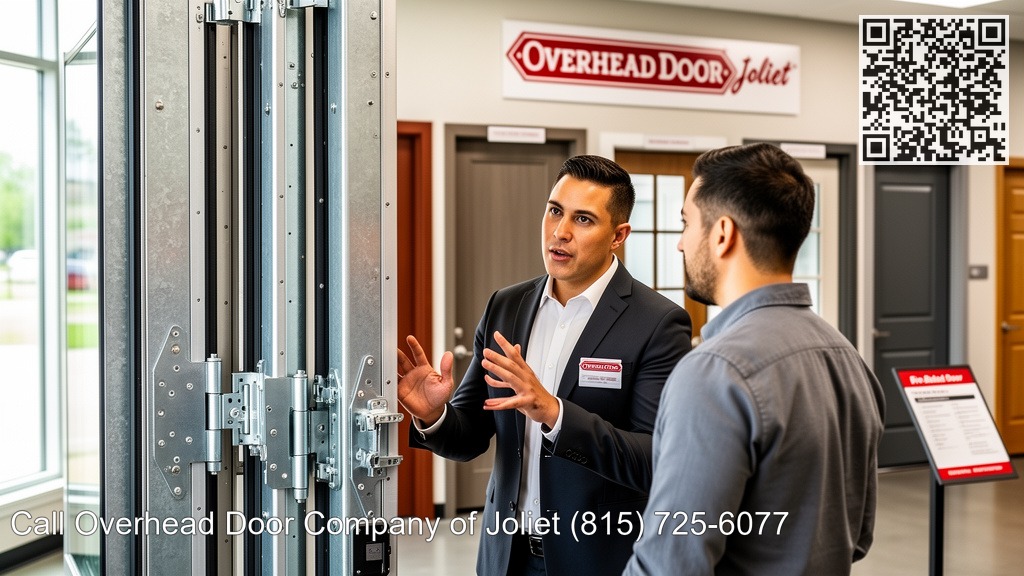
NFPA 80 requires yearly assessment and screening of fire doors, consisting of a drop test and recorded reset. Throughout these gos to, we look beyond the form. We inspect the fusible link place versus warmth resources, confirm the guv releases efficiently, and make certain the launching gadget reacts to the fire alarm control panel. For mechanized doors, UL 325 logic and monitored security gadgets must be verified more often, particularly if renters or employees have accessibility to controls and could tape a photo eye to "survive the early morning thrill." That fast repair can become a responsibility if a person or a car becomes the obstruction the device stops working to detect.
Here is a basic upkeep rhythm that maintains most industrial garage doors trustworthy with Chicago seasons:
- Monthly for high-cycle doors: aesthetic evaluation, track and guide cleansing, photo-eye examination, and manual release exercise. Quarterly: torque examine anchor bolts, chain and sprocket inspection, springtime or barrel established screw verification, and lubrication where applicable. Semiannual prior to and after winter season: seal inspection, operator heating system function check, and hood or canopy cleansing to avoid ice buildup. Annual: NFPA 80 decrease test for rated doors, full operator reasoning verification, and paperwork package updated for the AHJ and insurance. After-impact or alarm system occasion: immediate assessment, components replacement if deformed, and monitored reset with sign-off.
That cadence lowers surprises. It also turns a garage door repair browse through into scheduled job as opposed to an emergency telephone call that quits procedures at 7 a.m. On a Monday.
Winter, wind, and the fact of Chicago openings
If you have actually ever seen a door freeze to a dock plate overnight, you recognize why we consume over lower seals and threshold information. Chicago winters months press on every interface. We specify PVC or EPDM seals that continue to be adaptable below absolutely no. We add warmed photo eyes where fog and frost prevail. On doors near the lake, we choose stainless or galvanized equipment to outlast the brine that accumulates in slush. In alleys that develop into wind passages, we tighten up guide interaction on rolling doors, select wind locks suitably, and include anti-sail equipment on sectional doors. It is not unique. It is simply years of watching what blows loose initially in February.
Sensor positioning issues in winter too. Picture eyes aimed right throughout a hectic technique lane obtain knocked or occluded. We install them a little bit higher, in protected housings, and route the wiring in inflexible conduit where hand trucks and pallet jacks wander. When doors available to the road, we tune close timers and car detection so idling shipment vans are not pumping warmth out of the building while the driver waits on a command that never ever comes.
Permitting, submittals, and dealing with the AHJ
Commercial garage door setup touches permitting more often than proprietors expect. Lots of fire-rated doors call for submittals that consist of UL listings, store drawings, wind tons information, and occasionally an expert engineer's stamp for attachment details. In Chicago and the near suburban areas, the Authority Having Territory might request a sequence of procedures narrative that demonstrates how the door behaves throughout power loss, alarm initiation, and hands-on override. We prepare that narrative in ordinary language and consist of panel locations and cable paths the inspector can see in the field.
Coordination with the emergency alarm contractor conserves days. The launching tool wants a monitored set from the FACP, and some panels want end-of-line resistors in particular spots. We map that out early, tag both sides of the wire, and leave a laminated layout near the device. When the alarm system technology turns up, the task goes quickly. When they do not, we can still show a tidy regional decline making use of the thermal web link and the gadget's own test button, with tags facing out for a quick photograph in the report.
Cost, downtime, and the math of better choices
Owners do deny doors for the happiness of it. They get uptime, power savings, danger decrease, and a much easier relationship with assessors and insurance coverage. The mathematics functions when you track lifecycle costs. A high-cycle springtime set might add a few hundred bucks at mount and save thousands in labor and lost time over five years. Insulated slats or sectional panels can go down power loss through a large opening by a shocking margin, particularly in warmed service center, where infiltration is the bad guy more than transmission. Also a small upgrade, like kept an eye on image eyes that can not be defeated without a mistake, can avoid one mishap payment that overshadows every service invoice for a decade.
Downtime has a real expense. A distribution center with eight docks sheds capacity when a door jams. A parking structure that can closed at 6 a.m. Sends out occupants to road auto parking and residential or commercial property administration into apology mode. We build use into the task. That can suggest selecting a conventional driver over a shop model with a three-week component lead time, or leaving a little much more gain access to room around the drive side in a cramped bay. Owners see the worth the first time a service technician fixes a problem in hours rather than days.
How FireKing partners from very first walk to last test
We reward every Commercial Garage Door Solution involvement as a task with a clear arc. It begins with a walk-through and a conversation about how the area really works. Website traffic matters, change adjustments, temperature set factors, and nearby hazards inform the product option. From there, we produce submittals that address the typical code concerns directly: tags, wind load, UL 325 conformity, NFPA 80 setup notes, and a wiring diagram for the releasing device.
On set up day, our staffs show up with equipment that matches the accepted illustrations, not what took place to be on the vehicle. We work with lifts and lane closures, safeguard finished floorings, and maintain a tidy work zone so procedures can continue. For rolling fire doors, we present the decline tests when stakeholders can watch, then we instruct resets to the people who will be on site long after the ribbon is cut. We leave a turnover package with photos of labels, torque logs, and examination outcomes. That packet has ended much more arguments with assessors than any type of speech ever could.
After handoff, we support the deal with receptive garage door repair work and preventative maintenance. If a driver trips a fault at 5 a.m. In January, we understand precisely which tool you have, which reasoning it runs, and where its components reside in our stock. That degree of information originates from dealing with each task like a living system, not a one-off sale.
Bringing it all together
A safe, certified, hard-working garage door in Chicago is the sum of numerous little choices. The code citations matter, but so do the wintertime seals, the wind locks, the operator heating unit, the setting of a horn strobe, and the label you can actually see when an assessor bends under the hood. FireKing lives in those decisions. We do Industrial Garage Door Installation that respects the letter of the code and the everyday grind of the city. We back it with Business garage door repair service that maintains doors all set to do their job on regular Tuesdays and on the day when smoke, heat, and people's lives test the system for real.
If you are preparing a new garage door installation, updating a mixed-use structure for far better separation, or searching for a Garage Door Solution companion who understands why assessors bring flashlights to seek labels under hoods, bring us the trouble. We will bring the tape, the standards, the lived experience, https://garrettjxjx793.readspirex.com/posts/updated-fireking-roll-up-steel-doors-what-chicagoland-requirements-to-understand-about-garage-door-installment and a group that takes satisfaction in the audio a properly tuned door makes when it lands degree, seals tight, and stands prepared for its following cycle.
 Ask ChatGPT
 Ask Grok
 Ask Perplexity
 Ask Claude
 Ask Google AI
 Ask You